

Switching from DSLR to Mirrorless
Most discussions about switching to mirrorless focus on features. Eye-AF. Frame rates. In-Body-Image-Stabilisation (IBIS). Video specs. Those are easy to list and easy to market. What is talked about far less is the cognitive and behavioural shock that comes from abandoning years, sometimes decades, of DSLR muscle memory.
If you have spent a long time shooting Nikon (or any other brand) DSLRs, the transition is not just a hardware upgrade. It is a re-negotiation of how you see, how you trust the camera, and how you decide whether a photograph is “done” at the point of capture.
This article is about that gap. The things you only discover after the honeymoon period.
The Viewfinder Stops Being a Window and Starts Being an Argument.
An optical viewfinder is passive. It shows you the world, and your brain overlays judgement on top of it. Exposure is something you predict, not something you see.
I notice that emphatically when I switched back to using an older DSLR recently after having used mirrorless for the last 3 years.
An electronic viewfinder does not behave the same way. It asserts an opinion where the DSLR mostly lacks one.
Exposure compensation is no longer abstract. White balance is no longer a background decision. Picture controls, profiles, and tone curves are no longer downstream choices, they actively affect what you see while composing.
This sounds like progress, and in many ways it is. But it introduces a new failure mode: you can start composing for the simulation instead of the scene. Many DSLR shooters initially trust the EVF too much, then overcorrect, then distrust it entirely, before eventually learning where it lies and where it tells the truth.
The uncomfortable part is this: the EVF forces you to confront how much of your DSLR shooting success relied on intuition rather than certainty.
As an example: I’ve come to completely ignore Histograms and Exposure warnings in my Z8. They are all turned off. Instead I engage in the scene.
Autofocus Becomes Less Mechanical and More Psychological
DSLR autofocus trains you to think in terms of points, groups, and re-composition. You learn where the system is strong, where it hesitates, and how to “help” it.
Mirrorless autofocus, particularly on modern Nikon bodies like the Z8, behaves more like intent inference. Subject detection, eye detection, and tracking remove some explicit control but add a new variable: confidence.
The shock is not that it fails. The shock is that it usually succeeds, until it doesn’t, and when it doesn’t, it fails in ways that feel opaque rather than mechanical.
You are no longer asking “did I choose the right AF point?”
You are asking “did the camera understand what I meant?”
That is a different mental contract, and it takes time to recalibrate your tolerance for it.
When shooting bird photos, I’m constantly on automatic bird detection, and the camera reliably finds the eye, if visible, and when the contrast is sufficient. But for shooting other subjects, I haven’t yet found my happy place.
Your Old Lenses Don’t Feel the Way You Expect, Even When They Work Perfectly
Adapted F-mount lenses via the FTZ (or FTZii) behave far better than you might expect, optically and electronically. That is not the problem.
The problem is tactile and behavioural.
Balance changes. The camera wants to live closer to your face. Shutter feel changes. The absence of a mirror subtly alters how you time shots, especially in low-light or long-exposure work because you no longer have that physical feedback of “open” and “close” vibration and sound.
Nothing is wrong, but nothing is quite where your hands expect it to be either. This is where many photographers quietly realise that familiarity, not sharpness, was doing more work than they thought.
Despite having a perfectly good suite of F-mount lenses for DSLR that worked fine through the FTZii, I migrated all of my glass to Z mount to be more intuitive and balanced with the Z8.
The only real functional advancement I noticed with moving from F to Z lenses was improved VR, and even that might just be marginal. I’m not a lab-tester so that’s just a gut feeling.
Exposure Discipline Changes, Whether You Want It To or Not
With a DSLR, exposure errors often feel like personal mistakes. With mirrorless, they feel negotiated.
The live histogram, highlight warnings, and exposure preview push you toward tighter exposure discipline. That sounds virtuous, but it can also narrow your willingness to take risks, especially if you came from a background where “fixable in post” was a conscious creative choice.
Mirrorless bodies encourage correctness at capture. That is not the same thing as encouraging intentionality.
You have to decide, explicitly, whether you accept that nudge or resist it.
Silent Shooting Changes How You Relate to the Moment
This one is rarely discussed, yet it has real consequences.
Silent shutters are not just quieter. They remove a form of feedback. The physical confirmation that something has happened disappears, and with it, some photographers lose rhythm, particularly in single-shot, contemplative genres like landscape or architecture.
Others experience the opposite: a sense of detachment that allows them to shoot more freely.
Neither reaction is “correct”. What matters is recognising that silence changes behaviour, not just noise levels.
This is why on Z8 I have intentionally set an exposure capture noise. Loud enough to hear when the camera is near my face, even in the wind or rain, but also quiet enough that it won’t especially disturb my subjects, which are often birds.
You Will Spend More Time Configuring Than You Expect, and That’s the Point
Mirrorless Nikon bodies are not difficult to use, but they are deep. Custom buttons, display modes, AF behaviours, exposure previews, focus aids, none of these are optional if you want the camera to behave predictably.
DSLR shooters often underestimate this and attempt to replicate their old setup one-to-one. That rarely works.
The better approach is to accept that mirrorless is not a DSLR without a mirror. It is a different control philosophy that rewards explicit decisions and punishes inherited habits.
My default viewfinder-displayed controls are currently:
- Shooting mode
- WB
- Exposure compensation
- ISO
- Focus Area
- Focus Mode
- Intervalometer
- IBIS
- Multi-exposure
- Sound
- Focus Peaking
- Metering Mode
I’ve also set Custom Buttons for quick switching between shooting modes, and use AF-ON instead of focus-release.
The above list is also fluid. I’ll probably have changed it by the time you are reading this, so don’t take it as a suggestion, take it as just a snapshot of a moment.
The Real Transition Is Trust, Not Technology.
The final thing no one tells you is that the switch is emotionally asymmetrical. What I mean by that is:
- You will lose confidence before you gain capability.
- You will question results that are objectively better.
- You will blame the camera for images that would have failed on your DSLR too.
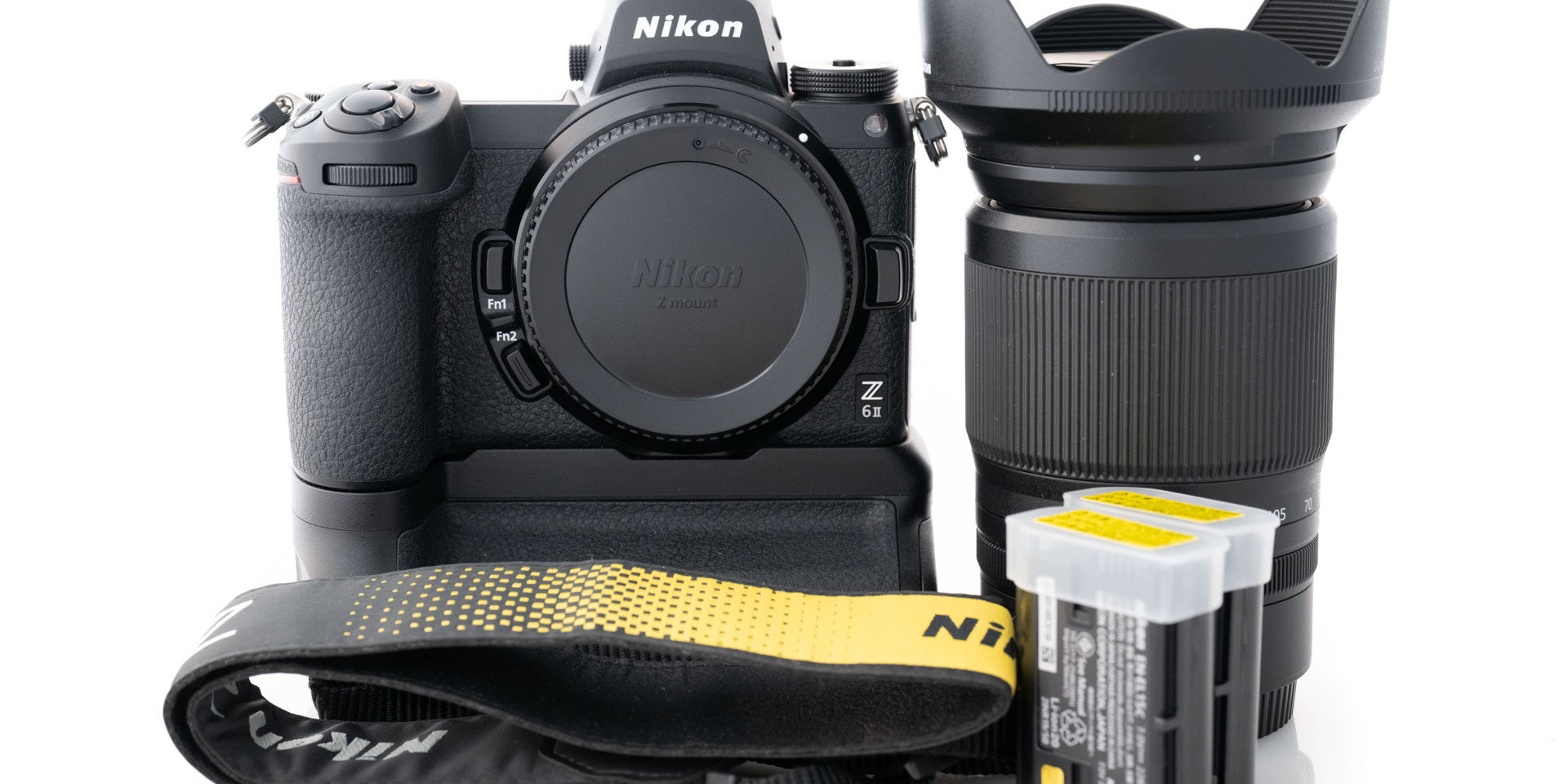
Eventually, if you persist, the system fades into the background again, and that is the real signal that the transition is complete. It’s taken me a while to get there, to be honest. But that’s in part because I really didn’t spend enough time properly getting to know my first Mirrorless, the Nikon Z6ii.
When the EVF Lies, and Why That’s Acceptable.
In this part of the article I want to expand more on what I experienced with using the EVF.
I don’t use the rear live view screen at all, and that’s mainly because it would require me to put on and take off reading glasses all the time, to switch between viewing styles. So that’s not at all convenient for me. I do all viewing, and most reviewing, in the EVF.
The most useful mental shift when moving from DSLR to mirrorless is accepting that the EVF is not a promise. It is a negotiated preview, optimised for usability first and accuracy second. Once you accept that, the behaviour stops feeling broken and starts feeling predictable.
The EVF does not lie arbitrarily. It lies systematically, under identifiable conditions, for engineering reasons that prioritise responsiveness and visibility over literal exposure simulation.
The key is learning when to treat the preview as truth, and when to apply a known offset.
Long exposures beyond ~1 second
This is the clearest and most widely reported case, and certainly one I have encountered often.
Once shutter speeds extend past roughly one second, the EVF and rear display stop attempting exposure-accurate simulation. Instead, they shift to a gain-boosted, short-integration feed that allows composition in near darkness.
The result is consistent across brands and models:
- An apparently “correct” long exposure looks materially underexposed in the EVF.
- To land the actual capture correctly, the preview often needs to appear 2–3 stops overexposed.
- The histogram and highlight warnings follow the same fiction.
Crucially, experienced users do not stop relying on the EVF here. They rely on it with a correction factor. The preview remains essential for framing and timing; it is simply no longer trusted as a quantitative exposure guide.
This is not a failure. It is a boundary condition.
So when I shoot night shots like cityscapes, I will intentionally make images appear overexposed in my EVF by a couple of stops.
Highlight warnings versus RAW headroom
Mirrorless highlight warnings feel more authoritative than DSLR blinkies because they are always present and tightly coupled to the preview. That authority is misleading.
Warnings are driven by the JPEG pipeline, picture profile, and tone curve, not by the full RAW latitude of the sensor. In practice:
- Highlights often appear “blown” in the EVF while remaining recoverable in RAW.
- New mirrorless users frequently under-expose to silence warnings.
- Over time, many relearn to expose into zebras, trusting sensor headroom over preview alarms.
The EVF is conservative by design. It protects the JPEG, not your intent.
As noted above, I don’t even use this feature because I have got to the point where I intuitively know when my EVF is lying to me, and by how much.
Depth-of-field perception at small apertures
At apertures like f/11–f/16, especially in low light, the EVF increases gain to maintain brightness. The scene remains easy to view, but depth-of-field cues become unreliable.
What changes:
- The preview looks sharper and deeper than the final capture will resolve.
- Diffraction and focus precision penalties are masked.
- Fine focus errors are discovered on playback, not during composition.
Experienced users separate tasks: the EVF for framing, magnification for focus confirmation. The preview is treated as a convenience layer, not an optical truth.
I experience this a lot when using my collection of classic 1970s Nikkors on the FTZii adapter. That’s because there is no aperture coupling with the camera, so setting f/11 actually throttles light to the sensor in real-time. I can’t entirely rely on the EVF for this shooting condition.
Manual focus confidence inflation via focus peaking
Focus peaking highlights contrast edges, not actual focus plane accuracy. In mirrorless, this can create an early overconfidence phase.
Common transition pattern:
- Initial belief that manual focus has become trivial.
- Later discovery of systematic misses at wide apertures.
- Eventual recalibration: peaking for coarse alignment, magnification for final confirmation.
The EVF simplifies feedback, but that simplification hides tolerance limits rather than eliminating them.
IBIS stabilisation masking marginal technique
In-body stabilisation calms the live view dramatically. Hand-held compositions feel solid and reassuring, even at shutter speeds that would have felt risky on a DSLR.
The deception is subtle:
- The EVF shows stability, not exposure-time motion.
- Subject movement and residual camera motion still accumulate during capture.
- Results become inconsistent rather than predictably blurred.
Most photographers eventually re-establish personal shutter thresholds. They are different from DSLR thresholds, but they still exist.
The pattern to internalise
Across all these cases, the lesson is consistent:
The EVF is not a photograph of the future file.
It is a usability-optimised estimate.
Mirrorless does not remove judgement. It forces judgement to become explicit. DSLR shooting hid many of these corrections inside experience and intuition; mirrorless surfaces them as visible discrepancies.
Once you build a private rule set: when the EVF tells the truth, when it exaggerates, and when it optimises visibility instead of accuracy, the system becomes stable again.
At that point, the EVF stops being something you argue with and becomes something you manage. That is the real transition.
Key takeaways
What are the biggest differences photographers notice when switching from DSLR to mirrorless?
The biggest differences are not technical specifications but behavioural ones, including how the EVF mediates exposure decisions, how autofocus feels less mechanical, and how trust in the camera develops differently over time.
Why does using an electronic viewfinder feel strange after an optical viewfinder?
An EVF shows a processed preview rather than an optical scene, which can conflict with long-established exposure instincts, especially in low light or long-exposure situations.
Does mirrorless autofocus change how you shoot compared to DSLR?
Yes. Mirrorless autofocus relies more on subject detection and tracking logic rather than fixed focus points, which changes how photographers interpret focus accuracy and decision-making.
Is switching from DSLR to mirrorless mainly a technical upgrade?
No. The transition is largely psychological and behavioural, involving changes in timing, confidence, and how feedback from the camera influences shooting decisions.
How long does it take to feel comfortable after moving to mirrorless?
Comfort typically comes after a period of distrust and adjustment, once the photographer learns when to rely on the camera’s feedback and when to override it based on experience.